

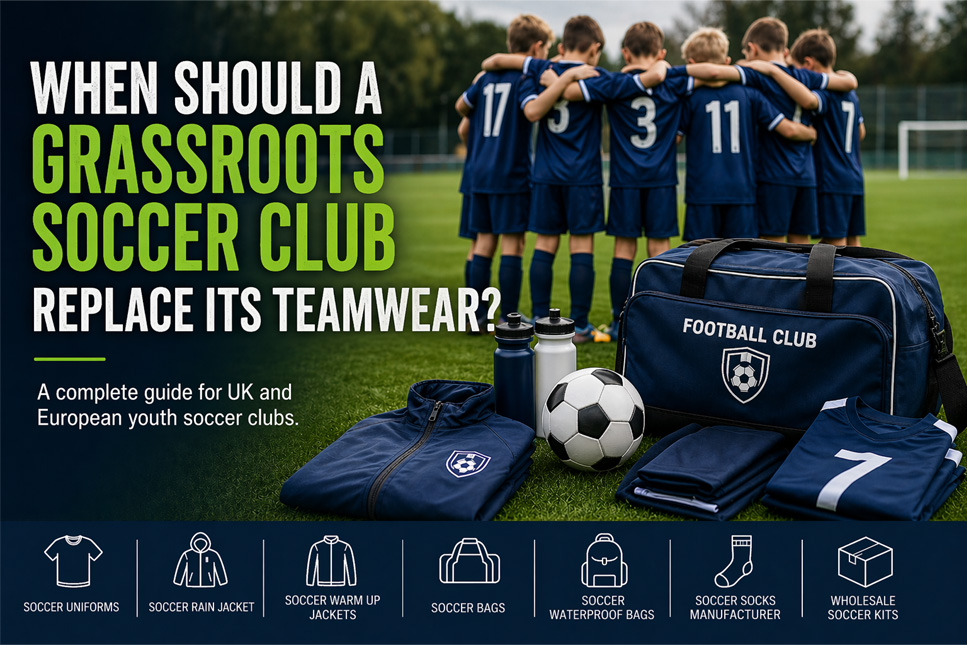
Grassroots Football clubs across the UK and Europe are under more pressure than ever to look professional, protect players from the weather, and manage tight budgets. For youth clubs especially, teamwear is not just about appearance. It affects comfort, player confidence, parent perception, sponsor value, and long-term club organization.
Many clubs keep using old kits, worn-out outerwear, and damaged bags longer than they should. At first, that seems like a cost-saving decision. But over time, faded football uniforms, rain jacket stock, torn football bags, and poor-quality socks can make a youth club look disorganized and unprepared.
So when is the right time to replace your football team wear?
This guide explains the signs, timing, and smart buying strategy for youth clubs in the UK and Europe that want durable, professional, and cost-effective teamwear.
Why Teamwear Matters for Youth Soccer Clubs
For a grassroots club, teamwear does much more than give players a uniform look.
High-quality soccer team wear helps clubs:
- Build a strong club identity
- Improve player comfort in training and matches
- Create a more professional impression for parents and sponsors
- Reduce replacement costs over the season
- Keep players prepared for changing UK and European weather
Youth players train and compete in rain, wind, and cold conditions. That means clubs need more than match kits alone. They need dependable soccer warm up jackets, durable soccer rain jacket options, strong soccer waterproof bags, and reliable socks from a trusted football socks manufacturer.
1. Replace Teamwear When Your Kits No Longer Represent Your Club Properly
Start by checking whether your current kits are still suitable for training and matches.
This usually shows up in a few ways:
- Colours are faded after repeated washing
- Logos are cracking, peeling, or misaligned
- Different age groups are wearing mismatched kit styles
- Old stock no longer matches the club’s current branding
- Players are using mixed items from different seasons
For youth clubs, presentation matters. Parents notice. Sponsors notice. Opposing teams notice. A coordinated, modern look gives the impression of a well-run organisation.
If your squads are wearing inconsistent soccer uniforms and outdated soccer jackes, it may be time to invest in a full refresh.
2. Replace it Before Seasonal Weather Changes
In the UK and across Europe, weather is one of the biggest reasons to update club gear. Many grassroots clubs wait until bad weather arrives before buying outerwear. By then, delivery schedules are tight, players are underprepared, and clubs often pay more for rush orders.
The best time to replace outerwear is before autumn and winter begin.
Youth clubs should review their stock of:
- football rain jacket
- Soccer warm up jackets
- Soccer waterproof bags
- Training layers and sideline outerwear
Rain and cold weather can affect performance, attendance, and player wellbeing. Good outerwear helps players stay warm before kickoff, dry during travel, and protected on the sidelines. This is especially important for younger age groups who need more protection during long training evenings and weekend fixtures.
If your current jackets are no longer water-resistant, have broken zips, or lack consistent branding, replacement should be planned before the next wet season starts.
3. Replace Teamwear When Players Outgrow It Too Quickly
Youth soccer clubs face a challenge that adult clubs do not. Players grow fast.
Even if the garments are still in decent condition, youth players may outgrow their kits within a season or two. That makes sizing strategy essential.
A club should consider replacing teamwear when:
- More than a third of players need a new size
- The current stock no longer covers all youth age groups
- Parents are struggling to reorder matching items
- The fit is uncomfortable or restricts movement
This is one reason many clubs move toward structured club ordering systems and wholesale soccer manufacturer kits packages. Buying in wholesale makes it easier to keep sizing consistent across squads while reducing cost per item.
For growing youth clubs in the UK and Europe, replacing teamwear is often less about damage and more about keeping up with player development.
4. Replace When Quality Problems Start Costing More Than Reordering
Some clubs delay replacement because they want to get maximum value from their current teamwear. That makes sense, but only up to a point.
If you are constantly replacing single items due to low quality, the total cost can become higher than placing one organised bulk order.
Watch for these warning signs:
- Socks wearing thin after short use
- Jackets losing stitching or zip function
- Bags tearing at the handles or base
- Printing fading too quickly
- Kits shrinking or losing shape after washing
This is why choosing the right supplier matters. A dependable soccer socks manufacturer can provide more durable socks for repeated weekly use. The same is true for outerwear and bags. Quality construction, better fabric, and professional finishing reduce replacement frequency.
For many clubs, replacing poor-quality items with stronger wholesale Custom soccer kits and accessories is actually the more economical move.
5. Replace When You Are Expanding the Club
Growth is one of the best reasons to replace or upgrade club gear.
If your youth club is adding:
- New age groups
- Additional teams
- Girls’ squads
- Academy or development programmes
- Sponsor partnerships
then your teamwear should grow with your structure.
Expansion is the ideal time to standardise your full soccer team wear range, including match kits, travel wear, jackets, socks, and soccer bags.
This helps clubs create a unified image from U7s to senior youth teams. It also makes future reordering easier because every item follows one visual system and one supplier relationship.
6. Replace Teamwear When Parents and Players Start Complaining
Parents and players are often the first to notice day-to-day issues. If complaints start increasing, it is worth reviewing your teamwear setup.
Common concerns include:
- Jackets are not warm enough
- Rainwear is not waterproof
- Socks fall down or wear out too fast
- Bags are too small or not durable
- Kits are uncomfortable or poorly sized
When several families raise the same issue, it usually means the current products are no longer fit for regular club use.
For youth clubs, satisfaction matters. Comfortable, practical gear improves the experience for players and reduces frustration for families. Replacing outdated items can improve both retention and club reputation.
7. Replace it When Your Club Needs a More Professional Look
Many grassroots clubs across the UK and Europe are becoming more ambitious with branding, social media, sponsorship, and community presence. In that environment, old teamwear can hold the club back.
Modern clubs increasingly want:
- Consistent colours across all age groups
- Branded soccer warm up jackets
- Better-designed soccer uniforms
- Matching soccer waterproof bags
- Durable socks from a reliable soccer team wear manufacturer
If your club is investing in growth, tournaments, or new sponsors, teamwear should support that progress. Clean and professionally made team gear helps youth clubs look serious and organized both on and off the field.
What Should Youth Clubs Look for in Replacement Teamwear?
When replacing teamwear, the goal should not be just buying new stock. It should be buying smarter.
A good supplier for UK and European youth clubs should offer:
- Durable fabrics for regular training and match use
- Flexible youth sizing
- Custom club colours and branding
- Outerwear suited to wet and cold weather
- Consistent quality across soccer uniforms, jackets, socks, and accessories
- Reliable delivery and repeat fast order support
It is also smart to work with one supplier that can handle a complete club range. That keeps designs and color shades consistent and simplifies future orders.
Why Wholesale Ordering Makes Sense for Youth Clubs
Buying teamwear one piece at a time may seem easier, but it often creates inconsistency and higher long-term cost.
Bulk ordering wholesale soccer kits and accessories helps clubs:
- Get better prices
- Keep all teams visually consistent
- Reorder more easily
- Plan ahead for growth
- Reduce stress before the season starts
This is especially useful for grassroots and academy-level clubs across Europe that want dependable supply and better value without sacrificing quality.
Conclusion
For youth clubs in the UK and Europe, the decision often comes down to a few simple questions:
Are the kits still professional-looking?
Are the training jackets still practical for wet conditions?
Are the bags and socks durable enough for weekly use?
Can the current supplier still support your club as it grows?
If the answer is no, it is time to upgrade.
The best replacement strategy is to plan ahead for your club’s soccer team wear, and work with a supplier that understands youth football needs. From soccer uniforms and soccer warm up jackets to soccer waterproof bags, wholesale soccer kits from a trusted manufacturer, the right setup can help your club look better, perform better, and stay organized all season.