

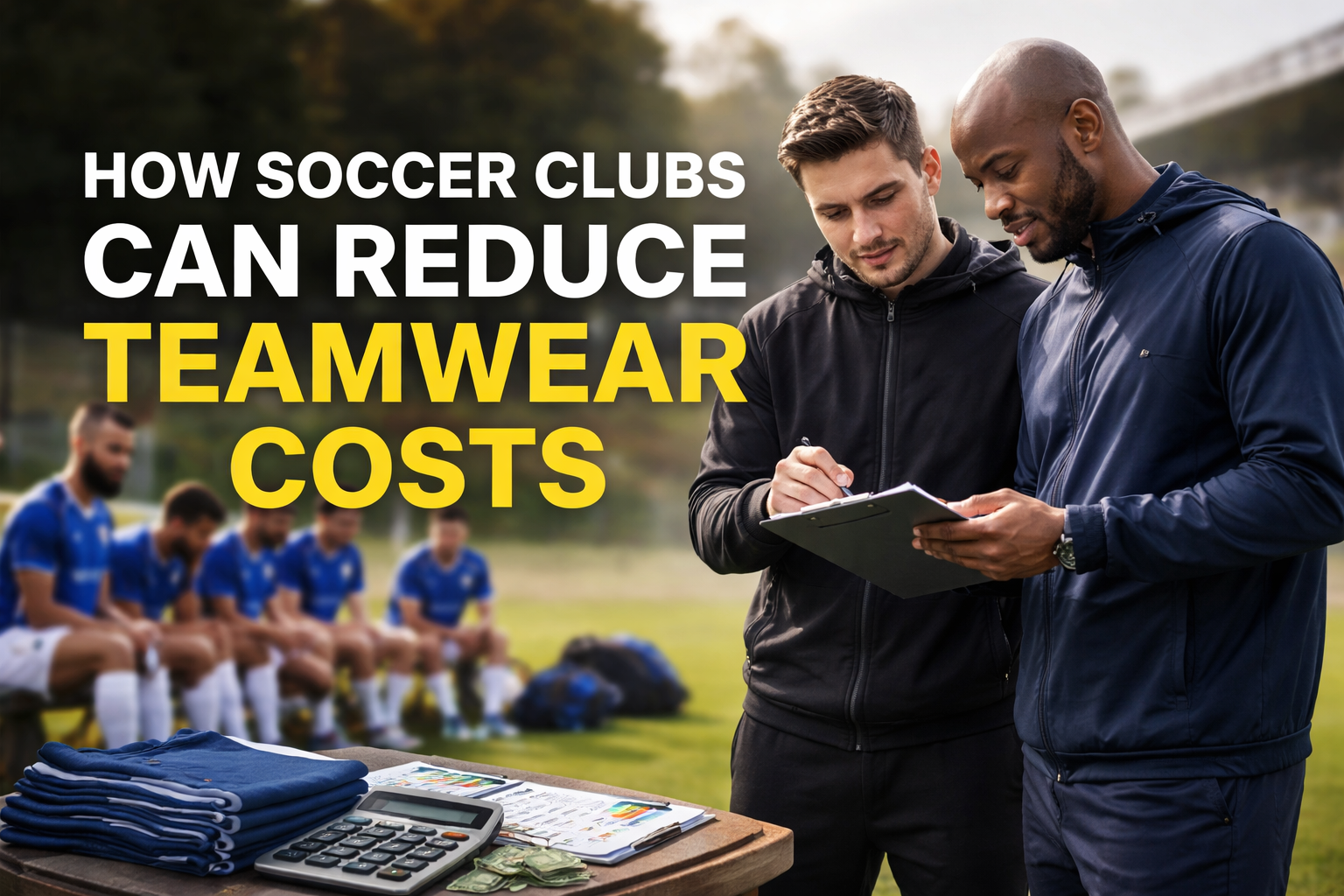
For many soccer clubs across Europe, controlling costs has become just as important as improving performance on the pitch. Between facility expenses, travel, equipment, league fees, coaching, and general administration, club budgets are under constant pressure. In that situation, teamwear is often one of the first areas where decision-makers try to save money. On the surface, that makes sense. If a club can buy cheaper jerseys, shorts, training tops, or jackets, it seems like an easy way to cut spending.
But in reality, buying low-cost teamwear without thinking about long-term value often creates bigger problems. Cheap kits wear out faster, colors fade, stitching opens, sizing becomes inconsistent, and reorders become difficult. What looked like a budget-friendly decision at first can end up costing more in replacements, complaints, and lost time. For club managers, academy owners, and team coordinators, the real goal should not be to buy the cheapest apparel possible. The smarter goal is to reduce teamwear costs without sacrificing quality, consistency, or professionalism.
That is where a more strategic approach to sourcing teamwear makes a real difference.
Why Teamwear Costs Matter More Than Ever
Soccer clubs today are expected to do more with limited budgets. Even small grassroots clubs are managing multiple age groups, girls’ teams, academy development squads, staff apparel, travel wear, training wear, and sponsor expectations. Teamwear is no longer just about having a shirt and shorts for matchday. It often includes full kits, socks, training jerseys, quarter zips, rain jackets, tracksuits, hoodies, and presentation wear.
When clubs do not plan these purchases properly, costs quickly rise. One season may start with a basic order for match kits, then later require top-up quantities, replacement items, coach wear, and winter layers. If the original order was placed with a supplier that offered low prices but weak consistency, the club may then struggle to match colors, logo placement, fabrics, and fit on later reorders. That creates both financial and operational stress.
This is why teamwear purchasing should be treated as a planned investment, not a rushed last-minute expense.
The Hidden Cost of Buying Cheap Teamwear
A lot of clubs believe they save money by choosing the lowest quotation. The problem is that the cheapest price on paper is often not the cheapest outcome in practice.
Low-quality teamwear usually shows its weakness very quickly. Fabrics may feel harsh or thin. Sublimation may lose sharpness after washing. Printed numbers and logos may start peeling. Seams may open under regular training use. Shorts may become transparent or lose shape. Socks may wear unevenly. Jackets and training tops may not hold up well in cold or wet conditions.
Once this starts happening, the club faces several hidden costs. First, replacement orders are needed sooner than expected. Second, staff must spend time dealing with complaints from coaches, players, and parents. Third, the club image suffers. A team that looks inconsistent, worn out, or poorly presented does not inspire the same confidence as a team with clean, professional apparel.
In many cases, what clubs think is a cheap order actually becomes an expensive cycle of fixing avoidable problems.
Quality Does Not Mean Luxury
One of the biggest misunderstandings in teamwear sourcing is the idea that quality automatically means premium prices. That is not always true. Good sourcing is not about buying the most expensive apparel on the market. It is about choosing the right balance between durability, function, appearance, and price.
For soccer clubs, quality usually means a few practical things. It means the fabric performs well during training and matches. It means the stitching is secure. It means colors stay consistent. It means the fit works across youth and adult sizes. It means reorders can be handled smoothly later in the season. It means the garments still look presentable after repeated use and washing.
That level of quality does not require luxury branding. It requires a reliable manufacturing and supply approach.
Common Mistakes Soccer Clubs Make When Ordering Teamwear
Many clubs overspend not because prices are too high, but because the buying process is weak.
One common mistake is ordering too late. When clubs delay decisions until just before the season or tournament period, they often lose the ability to compare suppliers properly, negotiate well, or plan quantities accurately. Urgency leads to rushed decisions, and rushed decisions usually lead to poor value.
Another mistake is focusing only on unit price. Clubs may compare two quotations and choose the cheaper one without looking at fabric type, print quality, reorder support, or delivery consistency. A lower price only matters if the product performs well enough to justify it.
A third mistake is splitting orders across multiple suppliers. This can sometimes look practical, especially if one supplier offers match kits and another offers training wear. But in many cases, this creates more admin work, more inconsistency, and more delays. Different suppliers may use different fabric shades, sizing charts, decoration methods, or lead times. For busy club managers and volunteers, that complexity can become a real burden.
Another frequent issue is poor quantity planning. Clubs often order only for immediate needs and forget about likely mid-season additions, replacements, staff requirements, or new registrations. Then they are forced into smaller top-up orders, which usually cost more per unit.
Finally, some clubs do not standardize branding properly. They may change designs too often, choose complex customizations without planning for reorders, or approve visuals without checking how they will scale across multiple sizes and teams. That leads to avoidable waste and confusion.
How Soccer Clubs Can Lower Teamwear Costs the Smart Way
The best way to reduce costs is not to lower standards. It is to improve planning, sourcing, and supplier relationships.
The first smart step is to build a seasonal apparel plan. Instead of thinking only about the next order, clubs should map out what they will likely need across the season. That may include match kits, training wear, goalkeeper kits, socks, rainwear, coach apparel, and travel wear. Once that picture is clear, clubs can buy more strategically and reduce emergency purchases.
The second step is to standardize products across teams where possible. If a club uses one consistent training top style, one matchwear direction, and one clear branding system across age groups, reordering becomes easier and more cost-effective. Standardization also strengthens club identity.
The third step is to work with a supplier who understands club operations, not just garment production. A good supplier helps the club simplify the process. That includes consistent sizing, clear artwork approval, practical MOQ options, reliable lead times, and the ability to reorder without starting from zero each time.
Another smart move is to bundle products instead of buying them one by one throughout the season. Clubs that plan kits, socks, and basic training wear together often gain better pricing and smoother coordination than clubs that buy each item separately at different times.
It is also wise to think in terms of cost per season rather than cost per item. A training jersey that lasts properly and keeps its appearance may be more valuable than a cheaper one that needs replacing quickly. Long-term value matters more than first impression pricing.
Why Reorder Support Is So Important
Reordering is one of the biggest pain points in club apparel. Players join late. Sizes change. Teams expand. Coaches ask for extras. Youth programs add new members. If the supplier cannot support reorders properly, clubs lose both money and control.
A supplier with a strong reorder system can save clubs from many problems. The club should be able to return for additional pieces and receive the same quality, the same colors, the same branding consistency, and the same general fit standard. That reduces stress and protects the club image.
This is especially important for academies and multi-team clubs. If Under-12, Under-15, senior squads, girls’ teams, and staff all need apparel across the season, then reorder reliability becomes almost as important as first-order pricing.
Teamwear Also Affects Club Image
Reducing teamwear costs does not only matter financially. It also affects how the club is seen by players, parents, staff, and sponsors.
A club with clean, consistent, professional-looking apparel appears more organized. It signals discipline, credibility, and ambition. Even at grassroots level, presentation matters. Players feel more united when they wear coordinated teamwear. Coaches and staff appear more professional. Parents often associate better presentation with better management. Sponsors also appreciate clubs that look well structured and visible.
This does not mean clubs must overspend on premium-fashion pieces. It simply means they should avoid cheap-looking, inconsistent, or quickly worn-out apparel that undermines their image.
What Soccer Clubs Should Look for in a Teamwear Supplier
When choosing a supplier, clubs should think beyond price. They should look for reliability, clarity, and support.
A good teamwear supplier should offer clear communication from the start. They should explain fabric options, customization methods, sampling, MOQ, timelines, and reorder processes in a simple way. They should provide a professional visual approval process, so names, numbers, logos, and colors are confirmed before production. They should also understand that clubs need practical solutions, not complexity.
Most importantly, the supplier should make life easier for the club. If working with a supplier creates confusion, delays, or repeated correction work, then even a low price is not worth it.
How FLP Gears Can Help Clubs Buy Smarter
At FLP Gears, we understand that clubs do not just need sportswear. They need a sourcing partner who can help them control costs while maintaining quality and consistency.
As a custom sportswear manufacturer, FLP Gears works with clubs, academies, and sports organizations that need practical teamwear solutions for matchwear, training wear, and clubwear. Our focus is on helping buyers avoid the common mistakes that lead to wasted money. That means supporting clear customization, stable production quality, sensible bulk pricing, and smoother reordering.
For clubs that want to reduce apparel costs without lowering standards, the key is not chasing the cheapest offer available. The key is building a smarter teamwear system. When products are planned properly, standardized across teams, and sourced from a dependable manufacturer, clubs can improve both value and presentation at the same time.
Final Thoughts
Soccer clubs across Europe are under pressure to manage budgets carefully. In that environment, teamwear decisions matter more than ever. But cutting costs should never mean accepting weak quality, inconsistent branding, or constant replacement problems.
The better approach is to buy smarter. Plan early. Standardize where possible. Think seasonally. Work with a supplier who understands reorders and club operations. Focus on long-term value instead of short-term pricing alone.
When clubs follow that approach, they do not just save money. They create a stronger, more professional, and more manageable apparel system for the entire season.
If your club, academy, or sports organization is looking for a reliable wholesale teamwear manufacturer for soccer kits, training wear, and clubwear, FLP Gears can help you build a solution that balances cost, quality, and consistency.